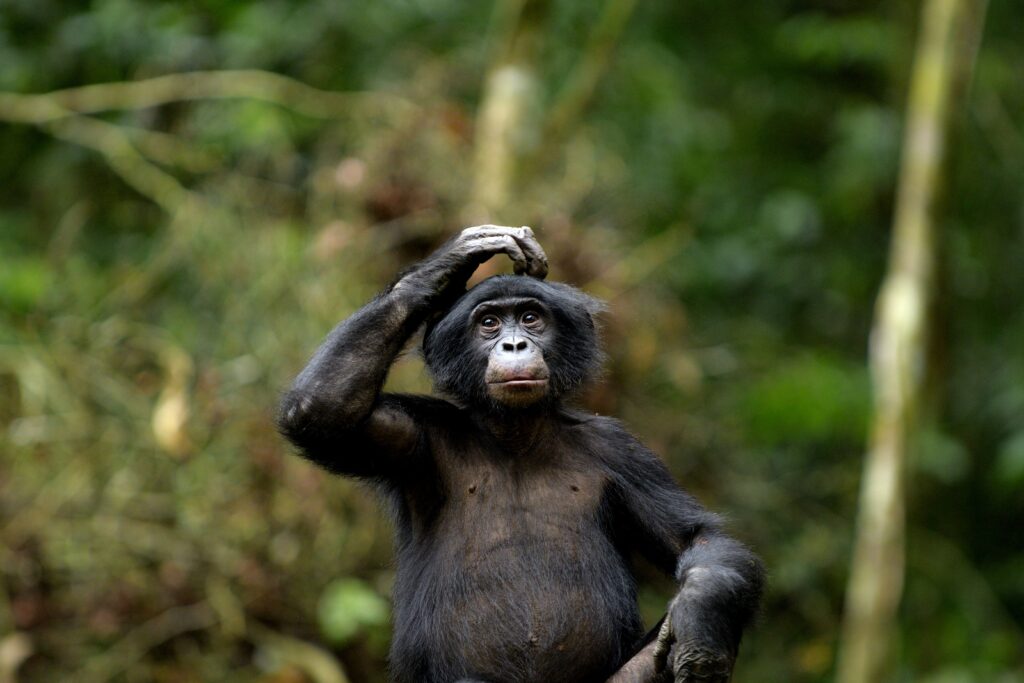
We finally published our study on selection landscapes in the great apes in Genome Biology, where we analysed the genomic diversity data curated earlier for bonobos, chimpanzees, eastern and western gorillas, and Bornean and Sumatran orangutans. We now pinpointed genetic regions recently favoured as well as long-standing “balancing” hotspots where different gene versions are maintained because each can be useful. We highlight changes that likely helped each species thrive in its niche, from genes tied to sperm production that hint at intense mating competition, to sensory genes involved in vision and sound perception (including hearing in bonobos), to metabolism genes that may reflect different diets.
Mountain gorillas stand out: an enrichment of hair-keratin genes points to thicker, longer coats suited to life at high altitude. Immune defenses also emerge as repeated battlegrounds, with some gene variants maintained because each can help against fast-evolving pathogens, and other immune genes showing recent selective surges across species. The study also flags candidates tied to social behaviour, potentially relevant to bonobos’ famously peaceful societies, and shows that even neighbouring ape populations may have faced different recent pressures.

An another note, we went to an Uzbek restaurant to celebrate the Boz-Barmak paper published recently.